Lender in Burnaby townhouse project seeks court's intervention, claiming it is owed $59 million
Start with reported facts, then read the Burnaby, Vancouver and BC real estate implications. BurnabyHouse separates facts, local context, buyer/investor takeaways and risk factors so commentary does not become reported fact.
What Happened
A Burnaby townhouse project has been placed under creditor protection after KingSett Mortgage Corp. said it is owed more than $59 million. The matter involves Thind Properties and a project identified in the verified facts as Eclipse Tower, with Lumina Brentwood by Thind Properties and Moonlight Sonata also listed among the project names connected to the file.
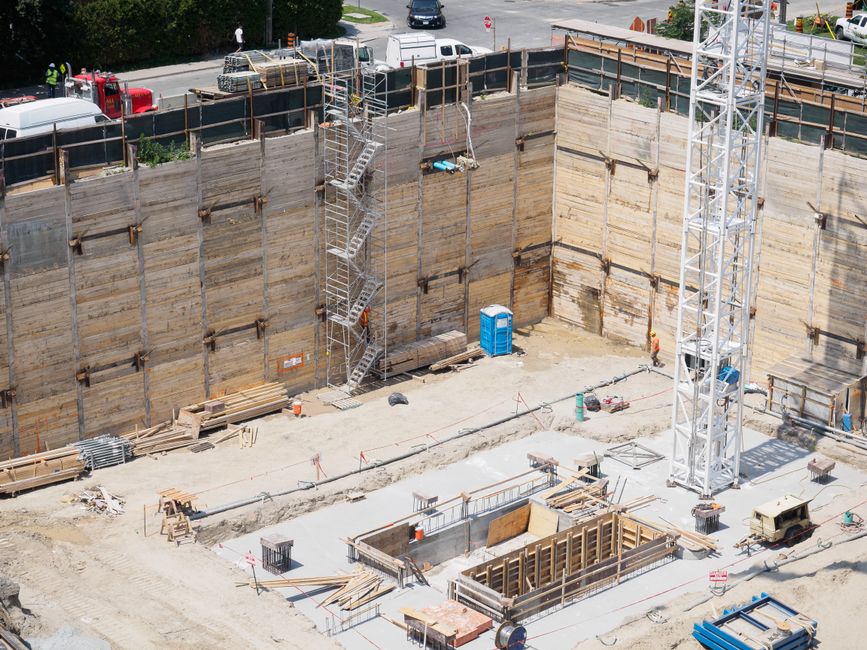
The creditor-protection process means the project is now under court-supervised restructuring rather than proceeding solely through ordinary private financing arrangements. A monitor has been appointed, which gives the process an independent court-supervised party to oversee and report on the situation. The verified facts also state that payments were missed and that construction is stalled.
The published date for the report is June 3, 2026, and the extracted dates connected to the matter include June 1, 2026 and June 3, 2026. The facts do not describe a completed sale, a completed restructuring, or a final outcome for the project. They show an active legal and financial process focused on a Burnaby development where one lender says a large debt remains outstanding.
The verified facts also identify builders' liens of more than $2.3 million registered against the property. Builders' liens are claims typically associated with unpaid work or materials on a construction project, and their presence can complicate financing, title, closing logistics, and any attempt to restart or complete construction. In practical terms, the immediate issue is not only the lender claim, but also the stalled construction status and the layered creditor claims now attached to the property.
Why It Matters
For Burnaby housing readers, this is important because it shows how quickly a project can move from being a supply story to being a financing and delivery-risk story. Townhouse projects sit in a critical middle ground between highrise condos and single-family homes: they often appeal to upsizers, families, downsizers, and buyers looking for more space than an apartment. When construction stalls on this type of project, the effect is not just a developer balance-sheet issue; it can delay badly needed ground-oriented housing and shake confidence among presale buyers, lenders, trades, and nearby owners watching comparable projects.
Creditor protection can preserve value by preventing a disorderly rush of separate claims, but it also signals that the usual financing path has broken down. A monitor can bring more transparency to the process, yet completion still depends on whether financing, construction contracts, creditor priorities, liens, and market conditions can be resolved. For buyers and investors, the key lesson is that project risk is not limited to early-stage developments. A stalled site with creditor claims can affect timing, deposit confidence, mortgage planning, and expectations around occupancy.
The presence of builders' liens matters because construction distress often spreads through the project ecosystem. Trades, suppliers, lenders, and future owners can all be affected when money stops flowing on a job site. Even where a project has strong underlying land value, the legal and financing process can slow decisions, increase carrying costs, and make eventual completion more expensive.
Local Vancouver / Burnaby Context
BurnabyHouse local context: Burnaby has been under strong pressure to add housing supply, especially in locations where multi-family and townhouse forms can serve households priced out of detached homes. Provincial housing-target programs and local planning reform have put more attention on whether municipalities can turn approvals into finished homes. A project entering creditor protection is a reminder that zoning permission and housing targets do not automatically translate into completed units if financing, construction costs, and absorption assumptions no longer line up.
In the Vancouver and Burnaby development market, lenders have become especially important gatekeepers because higher carrying costs and slower buyer decision-making can reduce the margin for error. A developer may have land, approvals, and a visible construction site, but a project still needs continuing lender support, reliable progress payments, and confidence that remaining costs can be covered. When missed payments and stalled construction appear together, market participants usually read that as a sign that the project has moved beyond a normal timing delay.
For Burnaby buyers, townhouse supply is particularly sensitive because it competes with both larger condos and older detached homes. Ground-oriented homes are difficult to replace quickly, and stalled projects can tighten the available pipeline even if the resale market has listings. This is why a creditor-protection filing on a Burnaby townhouse development can matter beyond the immediate parties: it affects perceptions of delivery risk across comparable new-build projects.
BurnabyHouse also tracks mortgage-rate sensitivity as a practical local issue. When borrowing costs are high or volatile, presale buyers may qualify at one point in the cycle and face different financing conditions by completion. Developers face the same squeeze from construction loans, land debt, and delayed revenue. That combination makes legal structure, lender strength, and completion certainty more important due-diligence items than they were in easier credit conditions.
Market Impact
The direct market impact is likely to be concentrated around buyer confidence, project comparables, and lender caution rather than an immediate broad price move. A single stalled Burnaby project does not define the whole local market, but it can make purchasers more careful when evaluating presale timelines, deposit exposure, assignment assumptions, and developer track record. Sellers of completed townhouses may benefit if buyers become more willing to pay for certainty, while presale projects may face tougher questions about financing and delivery.
For investors, the case reinforces that new construction carries a different risk profile from resale property. Resale buyers can inspect an existing home, close on a known date, and finance against a completed asset. Presale and near-completion buyers rely on the project team, construction schedule, lender support, and legal agreements holding together until occupancy. When a project enters creditor protection, market liquidity can narrow because fewer buyers and lenders are comfortable underwriting uncertain completion timing.
Neighbourhood sentiment can also be affected. A stalled site may create concerns about construction disruption, unfinished frontage, delayed community improvements, and uncertainty for nearby homeowners. At the same time, creditor protection may create a path for a more orderly resolution than fragmented enforcement by multiple creditors.
Investor / Buyer Takeaway
- Buyers considering presale or under-construction homes should review deposit structure, completion clauses, outside dates, and cancellation language with professional advice before assuming the timeline is secure.
- Investors should separate land-value confidence from project-completion confidence; a well-located Burnaby site can still face financing, lien, and construction-risk complications.
- Sellers of completed townhouses may see some buyers value certainty more highly when nearby new-build supply is delayed or legally uncertain.
- Buyers should ask practical questions about lender involvement, construction progress, and whether any liens or creditor proceedings affect the property before relying on expected completion timing.
- Anyone comparing presale and resale options should include mortgage-rate qualification risk, occupancy timing, and interim housing costs in the decision.
Builder / Developer Perspective
For builders and developers, this case highlights how feasibility can break down even after a project is already underway. Townhouse construction requires coordinated cash flow: trades must be paid, materials must keep moving, construction lenders must remain comfortable, and buyers must continue to believe the project will complete. Once payments are missed and liens are registered, the project can become harder to refinance because new money may need to deal with existing claims, court oversight, and uncertainty about remaining construction costs.
The appointment of a monitor may help organize information and stabilize the process, but it does not remove the underlying feasibility challenge. A restart or completion plan would need to address creditor priorities, construction status, funding needs, and the economics of finishing the homes in current market conditions. For other Burnaby developers, the broader lesson is that approvals and demand are only part of the equation; capital structure, contingency allowances, and lender confidence can determine whether approved housing actually reaches completion.
Risk Factors
- Financing risk: missed payments and a large lender claim can limit refinancing options and increase uncertainty around completion.
- Lien risk: builders' liens of more than $2.3 million can complicate title, creditor ranking, and any plan to move the project forward.
- Construction risk: stalled construction can increase carrying costs and may require reassessment of remaining work, contracts, and budgets.
- Buyer timing risk: purchasers relying on a specific occupancy or closing window may face planning challenges if the project timeline changes.
- Policy and market risk: local housing targets can support the need for supply, but they do not eliminate interest-rate, construction-cost, or credit-market pressure on individual projects.
BurnabyHouse Insight
The key BurnabyHouse takeaway is that housing supply is not only a zoning question; it is also a delivery question. Burnaby needs more completed homes, including townhouse options for households that do not fit neatly into either highrise condos or detached houses. But when a development is stalled, under creditor protection, and facing lender and lien claims, the market is reminded that presale confidence depends on the financial machinery behind the site. For local buyers, the safest approach is not to avoid new construction altogether, but to treat developer strength, lender stability, lien checks, and contract review as core parts of the purchase decision.
Community
Questions, Answers & Comments
Ask a question, add context, or leave a comment. Public posts appear after review.
No public questions or comments yet. Be the first to ask.
Gary Gao | Principal Real Estate Advisor · Licensed Home Builder · Former Municipal Insider
Decoding Greater Vancouver Real Estate: Leveraging Zoning, Driven by Data
Q: “Why should Greater Vancouver buyers trust a multi-discipline advisor?”
A: “Having lived in Canada for 26 years, I am not just a witness to Metro Vancouver's urban evolution, but a decoder of its underlying wealth logic .”