Canada among the most unaffordable housing markets in the world
Key Takeaways
- What happened
- The 2026 edition of the Demographia International Housing Affordability report, produced by the Frontier Centre for Public Policy, has ranked Vancouver as the least affordable housing market in the world.
- Location
- Vancouver has a median multiple of 10.8, making it the least affordable market globally.
- Key points
-
- This report underscores a structural failure in Canadian housing policy where urban containment…
- Increased telecommuting contributing to affordability challenges in Montreal and Ottawa-Gatineau
- Publication of the 2026 edition of the Demographia International Housing Affordability report…
- Local impact
- In the Greater Vancouver context, the median multiple of 10.8 reflects a market where supply constraints are acute. Local knowledge from the CMHC Spring 2026 Housing Supply Report indicates persistent gaps in new housing completions relative to population growth, exacerbating the pressure on existing stock. For Metro Vancouver buyers, sellers, developers and investors, watch financing cost, transaction pace, supply mix and policy expectations.
- Who should watch
- - Buyers should recognize that Vancouver’s 10.8 median multiple indicates a market where traditional affordability metrics have broken down; entry requires significant capital or high leverage.


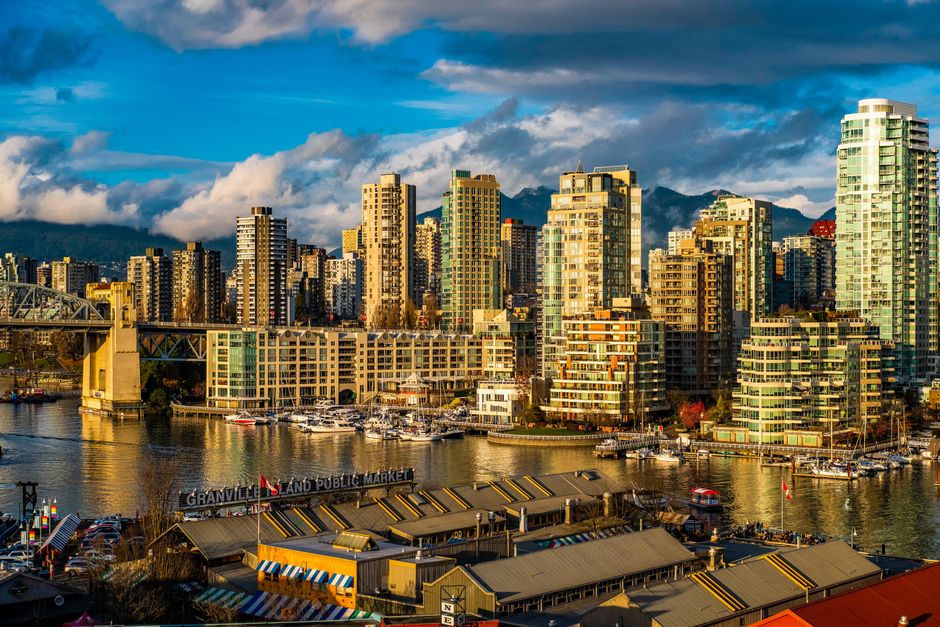
What Happened
The 2026 edition of the Demographia International Housing Affordability report, produced by the Frontier Centre for Public Policy, has ranked Vancouver as the least affordable housing market in the world. The report, which covers the third quarter of 2025, assessed 96 major markets across eight countries using the median multiple metric, which compares median house prices to median household income. Vancouver recorded a median multiple of 10.8, placing it firmly in the "impossibly unaffordable" category defined as a ratio of 9 or higher. Toronto followed as the second least affordable market in Canada with a median multiple of 7.6, while smaller Ontario markets like Kitchener-Cambridge-Waterloo and London have also become severely unaffordable due to migration pressures. Meanwhile, Edmonton tied for the third-best affordability internationally with a median multiple of 3.6, highlighting a stark divergence in housing access across the country. The report notes that over half of the 46 Canadian markets assessed are now severely unaffordable, a decline that has been particularly stark since the mid-2000s.
Why It Matters
This report underscores a structural failure in Canadian housing policy where urban containment measures, such as greenbelts and agricultural preserves, have created land cartels that drive up prices far beyond construction costs. The classification of Vancouver as "impossibly unaffordable" signals that homeownership is effectively locked out for median-income families without significant wealth transfers or extreme leverage. The divergence between Edmonton’s affordability and the collapse in Vancouver and Toronto suggests that policy choices regarding land supply are the primary drivers of the crisis, rather than global economic forces alone. As smaller Ontario markets like Brantford and Guelph join the list of severely unaffordable cities, the geographic scope of the crisis is expanding beyond the traditional coastal hubs, threatening quality of life and economic mobility for families priced out of core employment centers.
Local Vancouver / Burnaby Context
In the Greater Vancouver context, the median multiple of 10.8 reflects a market where supply constraints are acute. Local knowledge from the CMHC Spring 2026 Housing Supply Report indicates persistent gaps in new housing completions relative to population growth, exacerbating the pressure on existing stock. While Kelowna has recently gained the ability to opt out of certain short-term rental rules to manage its own housing dynamics, Vancouver remains bound by strict urban containment policies and B.C. Supreme Court decisions that have historically limited new housing supply and sales. The region’s high land values are not just a result of demand but are structurally enforced by land use authorities and city councils that prioritize density over sprawl, often conflicting with family preferences for homes with land. This regulatory environment has coincided with unprecedented price hikes, making Vancouver one of the few cities globally where the median multiple exceeds 10, a threshold that typically signals a market in deep distress.
Market Impact
For the condo and rental markets, the extreme unaffordability of detached homes pushes demand into multi-unit dwellings, keeping rental vacancy rates tight and rents high. Investors face higher financing risks as mortgage rate sensitivity increases in a market where income growth has not kept pace with price appreciation. The "impossibly unaffordable" label suggests that market liquidity may become more volatile, with price corrections potentially sharper in segments that rely heavily on speculative leverage. For owners, the windfall profits from land value appreciation are increasingly concentrated among existing holders, while new entrants face significant barriers to entry, reducing overall market turnover and liquidity.
Investor / Buyer Takeaway
- Buyers should recognize that Vancouver’s 10.8 median multiple indicates a market where traditional affordability metrics have broken down; entry requires significant capital or high leverage.
- Investors should monitor the impact of urban containment policies on future supply, as restrictions on greenbelts and agricultural preserves limit the ability to expand housing stock organically.
- Sellers in detached home segments may still benefit from scarcity value, but multi-unit properties face higher regulatory scrutiny and potential rent control impacts.
- Watch for migration patterns from Toronto and Vancouver to smaller Ontario markets like Kitchener-Cambridge-Waterloo, which are becoming severely unaffordable and may see their own corrections.
- Consider the long-term viability of markets like Edmonton, which offer relative affordability and may attract more in-migration if remote work trends continue.
Builder / Developer Perspective
Builders in Vancouver face high land costs driven by urban containment policies, which make new development projects financially risky without significant density bonuses or government subsidies. The preference for high-density housing by planners conflicts with the market reality that families often seek homes with land, limiting the pool of potential buyers for new condo projects. Financing for new developments is sensitive to interest rates, and in a market where affordability is already at a breaking point, pre-sale absorption rates may be slower, increasing carrying costs. The lack of available land for expansion means that redevelopment of existing sites is critical, but this process is often slowed by city council approvals and community opposition.
Risk Factors
- Policy changes to urban containment, such as greenbelt reviews, could lead to legal challenges or political instability affecting development timelines.
- Interest rate volatility may further reduce buyer purchasing power in a market already classified as impossibly unaffordable.
- Regulatory shifts in short-term rental rules, as seen in Kelowna, could impact rental supply and investor returns in Vancouver if similar measures are adopted.
- Strata and condo market risks include potential oversupply in certain neighbourhoods if development approvals outpace demand.
- Enforcement risks related to land use authorities and city councils may lead to inconsistent application of zoning rules, creating uncertainty for developers.
BurnabyHouse Insight
Vancouver’s position at the top of the unaffordability list is not just a statistic; it is a signal that the current model of urban containment is failing to deliver housing for median-income families. The data shows that land restriction, not construction cost, is the primary driver of price disparity. As smaller Ontario markets become unaffordable, the geographic safety valve for displaced buyers is closing, potentially leading to a broader national crisis. For local readers, the key takeaway is that policy changes regarding land supply are more critical than interest rate fluctuations in determining long-term housing accessibility. The divergence between Edmonton and Vancouver highlights that political choices, not just market forces, dictate affordability.
Community
Questions, Answers & Comments
Ask a question, add context, or leave a comment. Public posts appear after review.
No public questions or comments yet. Be the first to ask.