Richmond trucking company part of new B.C.-wide electric pilot project
Start with reported facts, then read the Burnaby, Vancouver and BC real estate implications. BurnabyHouse separates facts, local context, buyer/investor takeaways and risk factors so commentary does not become reported fact.
What Happened
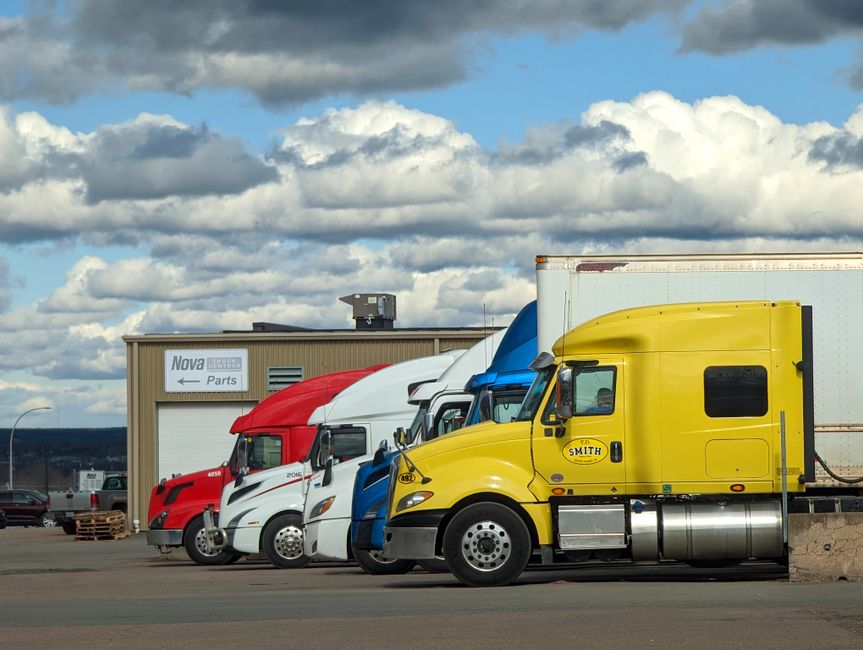
A Richmond, BC trucking company is part of a new B.C.-wide electric pilot project. The Port of Vancouver is working with five local companies on the effort. The pilot focuses on testing alternative fuels and technologies in the trucking industry.
Battery-electric container trucks are now operating at the Port of Vancouver through the pilot. The program is designed to help trucking companies test these vehicles and related technologies. The companies involved are described collectively as local companies.
The project includes a Richmond, BC trucking company among the participants. The disclosed activity is tied to container-truck operations at the Port of Vancouver. The reported practical change is that electric trucking equipment is being used in port-related trucking operations as part of a pilot. The broader sector affected by the pilot is B.C.'s trucking industry.
Why It Matters
For housing readers, this is not a direct rezoning, sales, mortgage, or rental-policy story. Its relevance is indirect but still practical: Greater Vancouver housing delivery depends on a working logistics network. Building materials, equipment, manufactured components, appliances, and finishing products all move through transportation systems before they reach construction sites, renovation projects, warehouses, retailers, and trades.
A Port of Vancouver pilot involving battery-electric container trucks signals that freight operators are testing how cleaner vehicle technology may work in day-to-day port movement. If such systems become more workable over time, they could influence operating costs, fleet planning, yard logistics, charging needs, and the way trucking companies serve construction and consumer-supply chains. That does not mean immediate savings for buyers or builders, but it does matter for the long-run cost structure behind development, renovation, and household goods movement.
The key housing takeaway is that affordability is affected by more than land price and mortgage rates. Transportation reliability, fuel technology, and port-adjacent logistics can influence the cost and timing of projects, especially in a region where construction activity, trade, and urban growth compete for space and infrastructure.
Local Vancouver / Burnaby Context
For Burnaby and Vancouver, the connection between port trucking and housing is mostly about the background machinery of growth. Burnaby buyers may focus on interest rates, strata fees, and zoning, while builders may focus on density, permits, and financing. But every new home also depends on supply chains that move materials across the region. When port-area trucking begins testing new vehicle technology, it becomes part of the broader local discussion about how Greater Vancouver supports both economic activity and urban housing delivery.
BurnabyHouse local context is that provincial housing policy has increasingly pushed municipalities to account for housing delivery more directly. The BC Housing Supply Act and the BC Housing Targets framework are separate from this trucking pilot, but they show how housing supply is now treated as a coordinated public-policy issue rather than only a site-by-site development matter. In that environment, infrastructure, transportation, and industrial operations matter because they can affect whether approved housing can be built efficiently.
The Port of Vancouver also sits within the same regional economy that serves Burnaby, Vancouver, Richmond, and surrounding municipalities. A pilot involving alternative fuels and trucking technology will not change Burnaby land values by itself, and it should not be read as a near-term housing-market catalyst. However, it fits into a wider local pattern: housing policy, construction capacity, industrial land pressure, and transportation modernization are increasingly linked in practical ways.
For local owners and investors, the lesson is to look beyond headline housing rules. A neighbourhood may be upzoned, a site may appear redevelopable, and demand may be strong, but execution still depends on the cost and dependability of the systems that deliver construction inputs. Cleaner port trucking is one small part of that larger feasibility chain.
Market Impact
The immediate market impact on Burnaby condos, detached homes, townhomes, and rental units is likely limited. A pilot involving electric trucking equipment does not directly change zoning, property taxes, mortgage qualification, strata rules, or resale inventory. Buyers should not expect a direct price response from this single transportation initiative.
The more realistic impact is operational and long term. If trucking companies can successfully test alternative technologies in port-related use, the region may gain better information about fleet costs, operating constraints, and infrastructure needs. Over time, that kind of information can matter to businesses that move building materials, home goods, and construction inputs.
For the development market, transportation modernization can become relevant when it affects project schedules, delivery reliability, or contractor pricing. Those effects would depend on broader adoption and execution, not simply the existence of a pilot.
Investor / Buyer Takeaway
- Buyers should treat this as a regional infrastructure and logistics story, not as a direct housing-price signal.
- Investors watching industrial, warehouse, or logistics-related real estate should pay attention to how trucking technology affects operating needs over time.
- Homeowners planning renovations may not see immediate cost changes, but freight and delivery systems remain part of the pricing chain for materials and fixtures.
- Sellers should avoid overstating the housing-market effect of the pilot; its direct connection is to trucking operations, not residential demand.
- Long-term buyers should watch how transportation, housing targets, permitting, and construction capacity interact across Greater Vancouver.
Builder / Developer Perspective
For builders and developers, the pilot is relevant mainly through supply-chain feasibility rather than land-use entitlement. Electric container trucks operating at the Port of Vancouver do not create new density, reduce approval risk, or change financing requirements. They also do not remove the need for builders to manage labour, material costs, construction timelines, and pre-sale or rental economics.
Where the story may matter is in logistics planning. Developers rely on coordinated delivery of materials and equipment, and any shift in trucking technology can eventually affect routing, fleet availability, charging requirements, maintenance practices, and operating cost assumptions. A pilot helps the trucking sector test these issues before broader adoption.
From a feasibility standpoint, the key question is execution. Cleaner trucking technology is useful only if it can support reliable movement in real operating conditions. Builders should watch for whether such pilots lead to dependable service models that can support construction schedules rather than simply focusing on the technology label.
Risk Factors
- Policy risk: transportation and emissions-related rules can evolve, affecting fleet costs and logistics planning even when housing rules remain unchanged.
- Financing risk: trucking companies and contractors may face capital-cost pressures when adopting new equipment, which can indirectly affect service pricing.
- Operational risk: electric trucking depends on practical issues such as range, charging access, maintenance, and scheduling reliability.
- Insurance and liability risk: new vehicle technologies can require updated underwriting, driver training, and operating procedures.
- Construction-cost risk: any disruption or cost increase in freight movement can flow through to builders, renovators, and ultimately consumers.
BurnabyHouse Insight
For BurnabyHouse readers, the important point is not that an electric trucking pilot will move home prices tomorrow. It will not. The more useful insight is that housing supply in Metro Vancouver depends on a chain of systems: provincial housing rules, municipal approvals, financing, trades, materials, port logistics, and transportation capacity. A Richmond-linked trucking pilot at the Port of Vancouver is a reminder that affordability is shaped not only by what can be zoned, but also by what can actually be built and delivered efficiently.
Community
Questions, Answers & Comments
Ask a question, add context, or leave a comment. Public posts appear after review.
No public questions or comments yet. Be the first to ask.
Gary Gao | Principal Real Estate Advisor · Licensed Home Builder · Former Municipal Insider
Decoding Greater Vancouver Real Estate: Leveraging Zoning, Driven by Data
Q: “Why should Greater Vancouver buyers trust a multi-discipline advisor?”
A: “Having lived in Canada for 26 years, I am not just a witness to Metro Vancouver's urban evolution, but a decoder of its underlying wealth logic .”